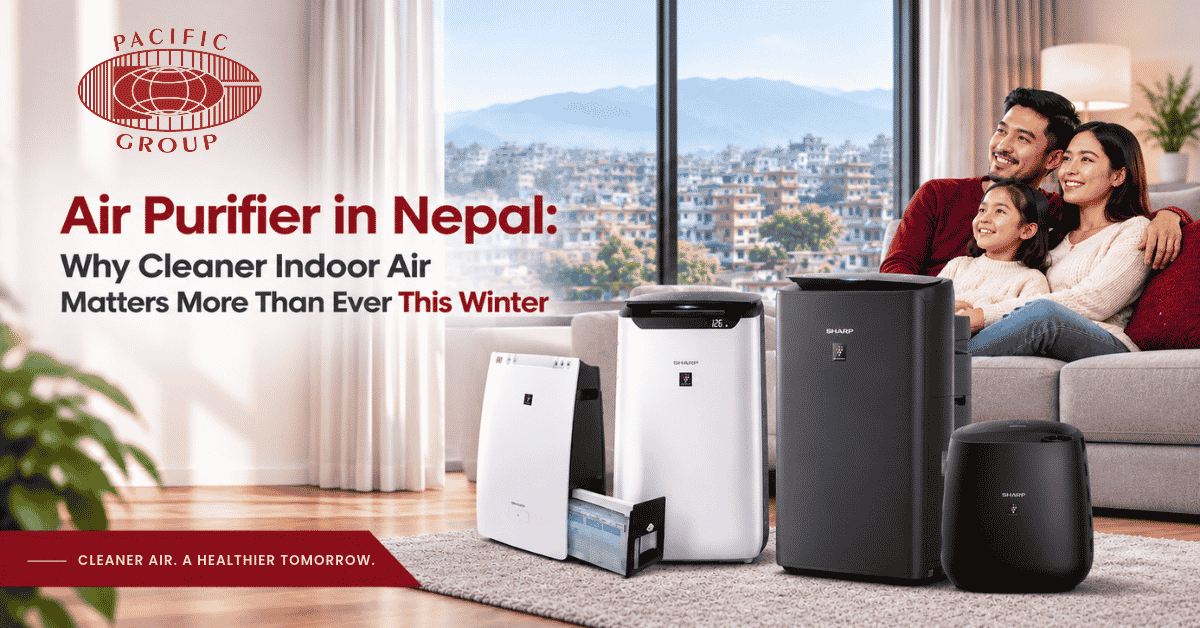
Air Purifier in Nepal: Why Cleaner Indoor Air Matters More Than Ever This Winter
November 19, 2026

Winter in Kathmandu has a familiar feeling. Cold mornings, hazy skies, dusty roads and a layer of smog that sometimes hides the hills surrounding the Valley. You close your windows to keep the cold and pollution outside. You spend more time indoors, believing that the air inside your home must be cleaner than the air on the streets.
But is the air inside your home really as clean as you think?
Dust, fine particles, cooking fumes and pollutants entering through doors and windows can affect the air you breathe indoors, too.
With air pollution remaining a serious concern in Kathmandu and other urban areas, an air purifier in Nepal is becoming an increasingly relevant consideration for homes, offices and other indoor spaces.
The question is not simply whether you need an air purifier. It is understanding what an air purifier can actually do, why it matters during winter and how to choose one that suits your needs.
Kathmandu’s air pollution problem is not new. However, winter brings conditions that can make it especially difficult for pollutants to disperse.
Vehicles, construction activities, road dust, brick kilns and waste burning all contribute to air pollution in and around the Valley. During colder months, low wind speeds, limited rainfall and atmospheric temperature inversions can allow pollutants to accumulate closer to the ground.
Kathmandu’s geography can further contribute to periods of stagnant air. The result is something residents know all too well: hazy mornings, reduced visibility and days when spending time outdoors feels uncomfortable.
The concern becomes even clearer when we look at actual air quality measurements.
According to the International Centre for Integrated Mountain Development (ICIMOD), its Khumaltar monitoring station recorded an average PM2.5 concentration of approximately 45 µg/m³ in December 2025. The average between December 2025 and February 2026 was around 50 µg/m³.
For perspective, the World Health Organization recommends a 24-hour PM2.5 guideline level of 15 µg/m³.
Although the measurements represent different averaging periods and should not be directly equated, they highlight the seriousness of Kathmandu’s pollution problem.
And the issue is not limited to what happens outside.
Think about how much time you spend at home.
You wake up in your bedroom, prepare breakfast in the kitchen, work or study indoors, and return to the same enclosed spaces in the evening. Even with the windows closed, outdoor air pollution can enter through gaps, ventilation openings and frequently opened doors. Indoor activities can also contribute to pollution. Cooking, burning incense, using candles, cleaning products, accumulated dust and pet dander can all affect indoor air quality.
During winter, people often keep windows shut for longer periods to retain warmth. This may reduce the entry of outdoor pollution, but it can also allow pollutants generated indoors to accumulate if ventilation is inadequate.
That is why managing indoor air quality requires more than simply closing your doors and windows. An air purifier can help reduce certain airborne pollutants in a room, providing an additional layer of protection alongside good ventilation and pollution-control practices.
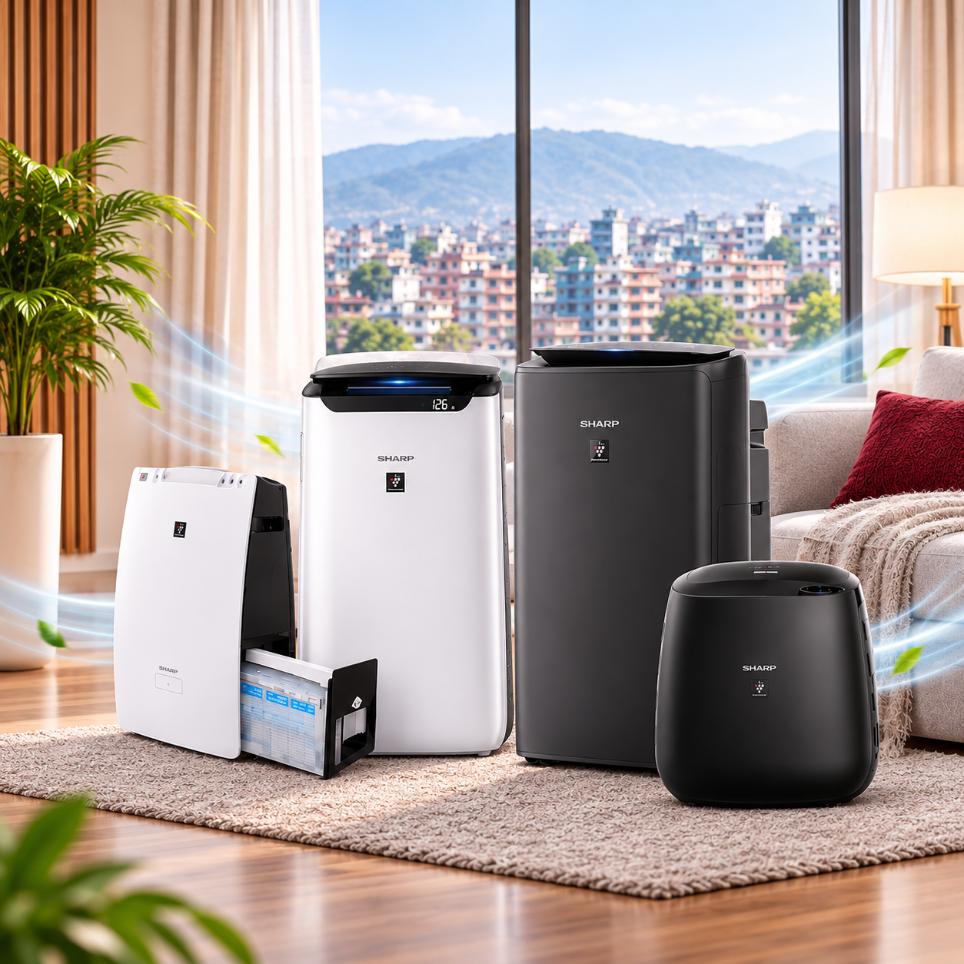
An air purifier is an electrical appliance designed to improve indoor air quality by removing selected airborne particles and, depending on its filtration system, certain gases and odors. Most filter-based air purifiers draw air into the unit, pass it through one or more filters and circulate the filtered air back into the room.
Different technologies serve different purposes.
A High-Efficiency Particulate Air (HEPA) filter is designed to capture very small airborne particles. Depending on the purifier’s design, HEPA filtration can help reduce:
For people living in Kathmandu, particle filtration is particularly important because PM2.5 is one of the major air pollution concerns.
PM2.5 refers to fine particulate matter with a diameter of 2.5 micrometres or smaller. These particles can penetrate deep into the lungs and are associated with adverse respiratory and cardiovascular effects.
Some air purifiers include an activated carbon filter designed to capture certain gaseous pollutants and help reduce unwanted odors. These may include some cooking smells, tobacco-related odors and other household sources.
However, the effectiveness depends on the filter’s design, carbon quantity and the type of pollutant. Not every air purifier removes every gas or smell.
Certain air purifiers incorporate ionization technology alongside conventional filtration. Ionizers release charged particles that interact with airborne substances. Their effectiveness varies depending on the technology, pollutant, testing conditions and individual appliance.
For this reason, buyers should consider verified filtration performance, room coverage and safety information rather than relying on ionization claims alone.
Winter creates several conditions that make indoor air quality worth paying closer attention to.
Living away from a major road does not necessarily mean your home is free from air pollution.
Fine particles can travel through the atmosphere and enter buildings through ventilation pathways and small openings. A properly sized air purifier with effective particle filtration can help reduce their concentration indoors.
Cold temperatures naturally encourage people to spend more time indoors, often with doors and windows closed. An air purifier helps filter particles from the room’s air while it operates.
However, it cannot replace ventilation. When outdoor air quality permits, bringing in cleaner outdoor air remains important for controlling pollutants such as carbon dioxide and certain indoor gases.
You may clean your room regularly and still notice dust accumulating on furniture.
Dusting and vacuuming help remove settled particles, but smaller particles may remain suspended in the air or become airborne again. An air purifier can complement routine cleaning by capturing some of these airborne particles.
Dry indoor air can cause discomfort, especially in heated rooms. Some air purifiers include a humidifier, allowing users to manage humidity alongside air filtration.
However, a humidifier serves a different purpose from an air purifier. It adds moisture to the air; it does not automatically remove pollution.
Maintaining appropriate humidity and cleaning the humidifier regularly are important for preventing excess moisture and microbial growth.
For households and workplaces exposed to particulate pollution, a suitable air purifier can be a useful investment in improving indoor air quality.
Its value depends on the type of pollution you want to address, the room size and how consistently the appliance is used.
An air purifier may be particularly useful in:
An air purifier should not be considered a cure for asthma, allergies or respiratory illness, nor can it guarantee protection against infections. Its primary role is to help reduce specific airborne pollutants.
If you are planning to buy an air purifier, choosing the right model matters more than simply choosing the largest or most expensive one.
Here are the features worth considering.
A purifier designed for a small bedroom may not provide sufficient filtration for a large living room or open-plan office. Measure the floor area and review the manufacturer’s recommended coverage. Also consider ceiling height, airflow and how frequently doors are opened.
CADR measures how quickly an air-cleaning device delivers filtered air for particular types of particles. Generally, a higher particle CADR means the purifier can clean the air more quickly or serve a larger room. For Kathmandu’s pollution concerns, smoke or fine-particle CADR is especially useful when comparing models.
Check whether the purifier includes a HEPA filter, pre-filter, activated carbon filter or other cleaning technology. A combination of filtration stages may be useful when you want to address both dust and certain odors.
If you intend to use an air purifier in your bedroom, check its operating noise at different fan speeds. A purifier that is too noisy may discourage regular use, particularly at night.
Air purifiers require maintenance. Filters can become loaded with captured particles, and some eventually need replacement. Before purchasing, find out whether replacement filters are available in Nepal, how frequently servicing is recommended and what ongoing costs to expect.
An air purifier is a long-term appliance purchase. Availability of genuine filters, warranty coverage, maintenance guidance and authorized technical assistance should all influence your decision.
As awareness of indoor air pollution grows in Nepal, people are looking for air purifiers that combine filtration performance, ease of use and reliable after-sales support.
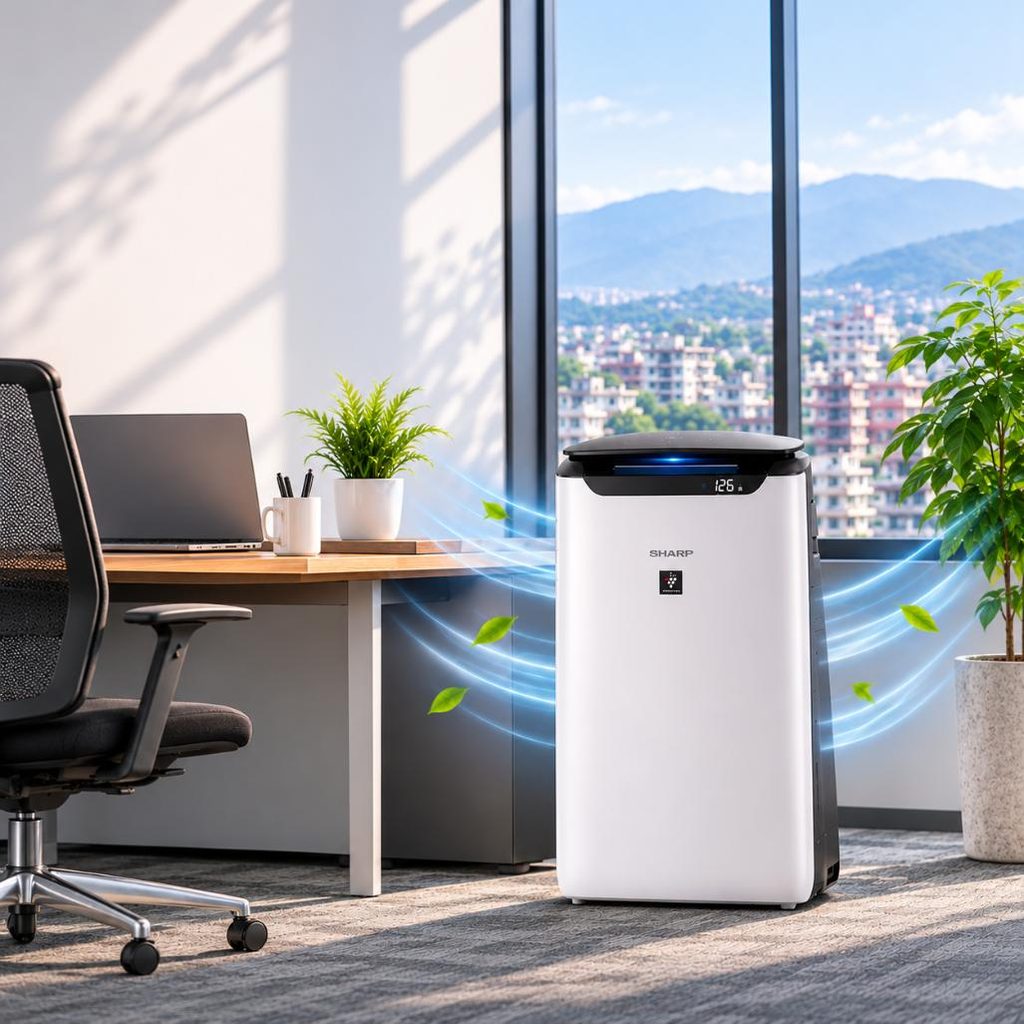
Pacific Commercial Company (PCC), part of Pacific Group, has introduced SHARP Plasmacluster air purification systems to the Nepalese market.
SHARP’s air purification range combines model-specific filtration systems with its proprietary Plasmacluster Ion Technology.
Plasmacluster technology generates positive and negative ions as part of SHARP’s air-cleaning approach. SHARP reports effects on selected airborne microorganisms, allergens and odors under specified test conditions.
Actual performance in homes and workplaces depends on the model, air circulation, room conditions and the pollutants present. These technology claims should not be interpreted as a guarantee of eliminating viruses or making a room infection-free.
PCC’s published range includes several types of SHARP air-cleaning solutions.
Designed for indoor spaces such as bedrooms and living rooms, with filtration and room-coverage capabilities varying by model.
Combine air purification with moisture control, which may be useful in dry indoor environments during winter.
Offer humidity-management functions that may be useful during damp or humid conditions. Specific functions depend on the model.
Available solutions can be considered for larger shared spaces, provided their filtration capacity is appropriate for the area.
SHARP’s USB-compatible Plasmacluster devices provide a compact option for vehicle cabins. Their air-cleaning capabilities differ from those of full-size filtered room purifiers.
Certain SHARP models incorporate insect-control functionality in addition to their air-cleaning features.
Since features differ across the range, buyers should confirm the model’s filtration system, room coverage, specifications and availability before purchasing.
Finding an air purifier is one thing. Ensuring you have access to the right product information and ongoing support is equally important.
PCC brings SHARP air purification technology to Nepal through Pacific Group’s consumer-appliance business.
The company also describes its nationwide distribution network, product guidance, warranty arrangements and after-sales services as part of its customer support.
For customers considering a SHARP air purifier, PCC can help them explore suitable models for their homes, offices or institutional requirements.
Explore SHARP air purifiers in Nepal through Pacific Commercial Company.
Buying an air purifier is only the beginning. How you use it can make a meaningful difference.
Remember that a portable air purifier generally cleans the air in the room where it operates. It should not be assumed to purify an entire house unless the system is designed for that purpose.
Yes. A properly selected air purifier with effective particle filtration can reduce airborne particulate pollution indoors, including some PM2.5 particles entering from outside.
Its effectiveness depends on the purifier’s capacity, filtration system, room size, placement and operating time.
The best air purifier is one that suits your room size, pollution concerns and budget.
Look for appropriate particle filtration, adequate CADR, manageable noise, genuine replacement filters and dependable after-sales support.
SHARP Plasmacluster air purifiers are among the options available through PCC in Nepal.
Yes. Effective particle-filtration systems, particularly appropriately designed HEPA-based purifiers, can capture fine airborne particles such as PM2.5.
Make sure the unit’s filtration capacity is suitable for your room.
Yes. Air purifiers can be particularly useful during winter pollution episodes when people spend longer periods indoors and outdoor particulate concentrations are elevated.
They can help reduce indoor particle exposure when used correctly.
Some filtration systems can capture airborne particles that contain microorganisms.
SHARP also reports specific laboratory-tested effects associated with its Plasmacluster technology.
However, an air purifier cannot guarantee the elimination of infectious microorganisms or prevent all airborne transmission. Ventilation and appropriate infection-prevention practices remain important.
Many air purifiers are designed for extended operation, including overnight use.
Follow the manufacturer’s instructions, ensure adequate airflow and choose a suitable noise setting.
Electricity consumption varies by model, fan speed and operating time.
Check the appliance’s rated wattage to estimate running costs.
An air purifier removes selected airborne pollutants through filtration or other air-cleaning technologies.
A humidifier adds moisture to the air.
Certain appliances combine both functions, but they address different indoor air-quality needs.
Air purifier prices vary depending on the brand, model, filtration system, room coverage and additional features.
For current SHARP air purifier availability, model specifications and pricing in Nepal, customers can contact Pacific Commercial Company.
You can enquire about SHARP Plasmacluster air purifiers through Pacific Commercial Company (PCC), part of Pacific Group.
Visit the Pacific Group Office & Home Appliances page for more information.
We cannot control every vehicle on Kathmandu’s roads, every construction site or every seasonal change in the air around us.
But we can take practical steps to improve the spaces where we spend much of our day.
Keeping indoor spaces clean, reducing pollution sources, ventilating when outdoor conditions are suitable and using an appropriately selected air purifier can all contribute to better indoor air quality.
Cleaner indoor air is not about making a home completely free from pollution. It is about reducing avoidable exposure and making the air in your everyday spaces better.
For households and workplaces exploring an air purifier in Nepal, SHARP’s Plasmacluster range offers several model options for different indoor environments.
Looking for an air purifier for your home, office or institution?
Explore SHARP Plasmacluster air purification solutions available through PCC and find a model suited to your indoor space.
Contact Pacific Commercial Company (PCC)
Pacific Building, Ramshah Path, Kathmandu, Nepal
SHARP enquiries: 9802364724
Website: www.pacific-nepal.com
Breathe more comfortably indoors. Start by making informed choices about the air around you.

